

Guest Speaker: David Crossley from Houston Tomorrow

At our most recent Winlow Place Civic Club meeting, we were treated to a discussion lead by David Crossley of Houston Tomorrow. Mr. Crossley talked about Houston’s increasing size and density, and what that might mean for residents’ quality of life. 

With a majority of the job growth and new residents in just a few key areas, Houston’s new boom is creating challenges and opportunities for providing a more sustainable, urban, transit-oriented future. For example, the increasing density of certain parts of Houston creates a great opportunity for workable transit. Mr. Crossley discussed the potential for Bus Rapid Transit ("BRT") to be a cheaper and quicker alternative to light rail as a way to address our near future needs. At the same time, political influence at the city and county level doesn't necessarily coincide with the places that are experiencing the most growth, which could potentially lead to a misallocation of resources. 

After Mr. Crossley"s presentation, Winlow Place Civic Club members asked a variety of insightful questions about how future developments might affect Montrose in general and Winlow Place in particular. It was a lively and interesting discussion!

– by Ben Garry
Welcome to the New Winlow Website

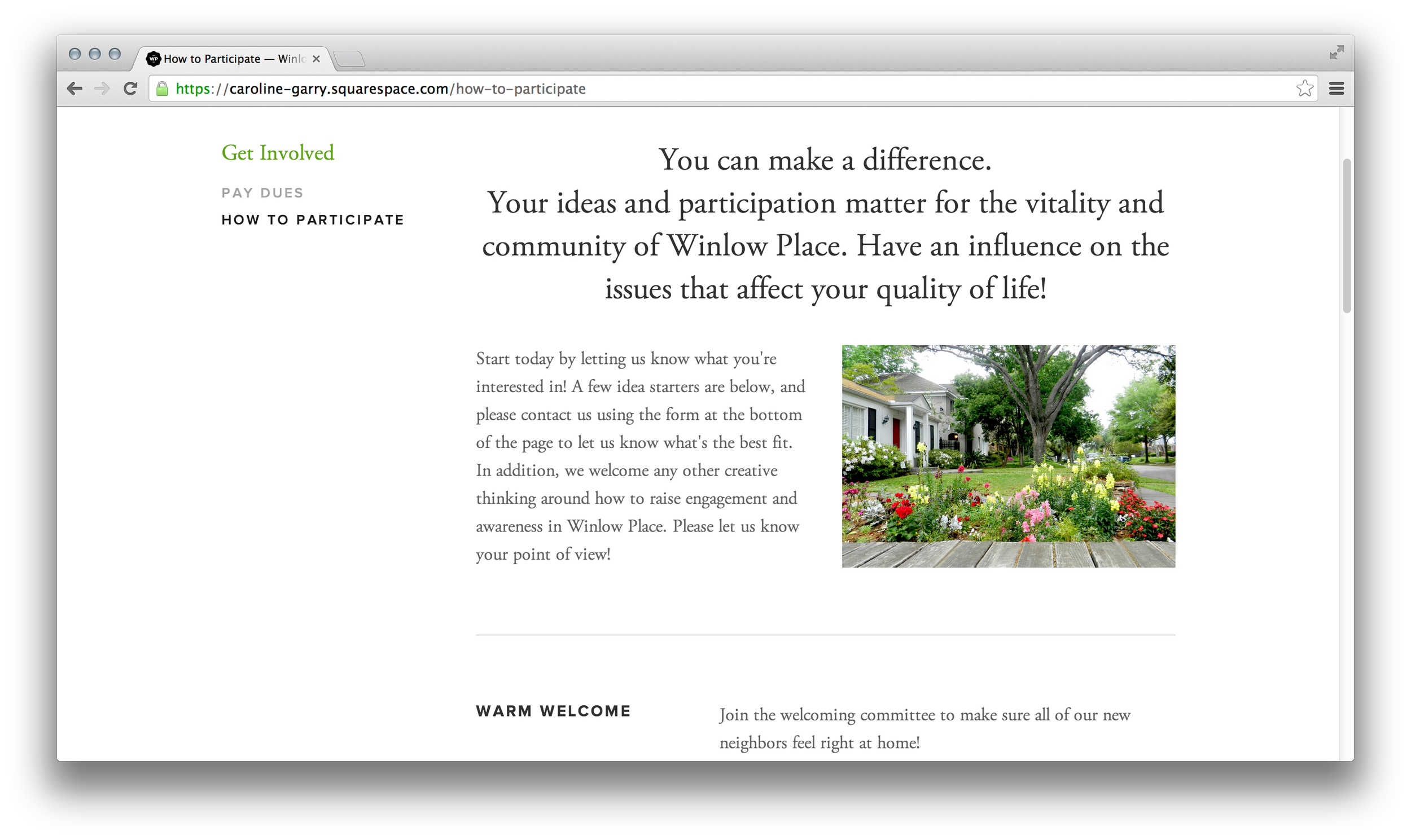
Hello neighbors! Welcome to the new online community for Winlow Place! We've been working diligently to launch a new website that promotes the strong sense of community and activism we already have – we hope that this website offers a platform for discussion.

A few of the features of our website:

  • Website is easily updated by our board and officers, so we can keep information current at all times.
  • A feature of the history and what makes Winlow Place so special.
  • Easy-to-find, updated deed restrictions and bylaws.
  • A rich blog that will include information on topics from architecture, to gardening, to art and history, to safety. Please let us know if you have a topic you'd like to feature!
  • A quick, secure way to pay dues online.
  • A "welcome kit" for our new neighbors.
  • Resources for our residents to have at their fingertips – including an archive of our newsletters and other helpful links.
  • A calendar of events.

If you ever have content that you wish to contribute, please email us using the form on the Contact page. We rely on the tips and creativity of our neighbors to keep the content on our Winlow Place vibrant and diverse.

In the meantime, happy browsing and we'll see you around the neighborhood! Cheers.

– by Caroline Garry

The Jewel of Montrose Preserves History

Bullock Mansion

Bullock Mansion

In the resounding echo of this week's tragic demolition of the Bullock Mansion on Lovett Boulevard, one of Houston's most beautiful and historic houses, this writer is deeply saddened while celebrating Winlow Place's on-going efforts at maintaining the historic integrity of our neighborhood.


“[Traveling] makes you realize what an immeasurably nice place much of America could be if only people possessed the same instinct for preservation as they do in Europe. You would think the millions of people who come to Williamsburg every year would say to each other, “Gosh, Bobbi, this place is beautiful. Let’s go home to Smellville and plant lots of trees and preserve all the fine old buildings.” But in fact that never occurs to them. They just go back and build more parking lots and Pizza Huts.”
— Bill Bryson, The Lost Continent: Travels in Small Town America
“The past is not the property of historians; it is a public possession. It belongs to anyone who is aware of it, and it grows by being shared. It sustains the whole society, which always needs the identity that only the past can give.”
— William J. Murtagh, Keeping Time: The History and Theory of Preservation in America

The bungalow took America by storm between 1905 and 1930, and although a most American housing type, its roots lie in India where it is thought to be a British colonial adaptation of the one-story thatch-roofed summer houses called bangala. The first American house to be called a bungalow was designed in 1879 by William Gibbons Preston, but two California architects, C. S. Greene and H. M. Greene are credited with inspiring America to build Bungalows with their publication of magazines and pattern books at the beginning of the 20th century.

Interior features of the American Bungalow:

  • One and a half stories
  • Most of the living spaces on the ground floor
  • Low-pitched roof and horizontal shape
  • Living room at the center
  • Connecting rooms without hallways
  • Highly efficient floor plan
  • Built-in cabinets, shelves, and seats

Exterior Details of the American Bungalow:

  • Built approximately 1900-1930 or more broadly 1895-1935
  • House, cabin or cottage of one or one-and-a-half stories
  • Low, horizontal lines and orientation
  • Low-pitched gable or hipped roof, often with dormer windows
  • Overhanging eves, exposed rafters and beams
  • A prominent and usually wide front porch
  • Typically, but not always, small in square footage
  • Exterior frequently built of natural, rustic materials, often obtained locally
  • Handcrafted details and joinery
  • Outdoor spaces and decks

American Bungalow is "the magazine published in the interest of preserving and restoring the modest American 20th Century home, the bungalow, and the rich lifestyle that it affords."

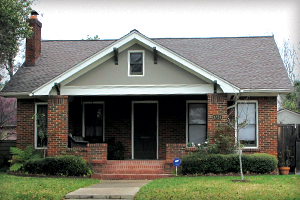
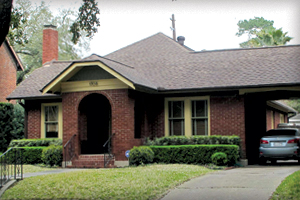
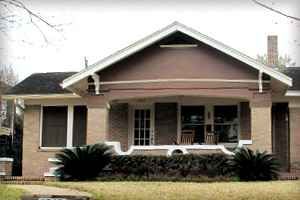
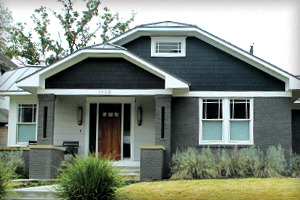
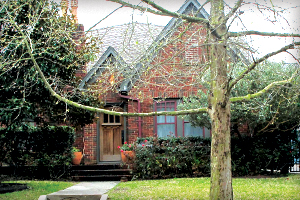
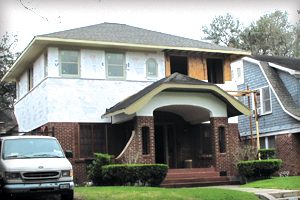
As fine examples of Winlow Place Bungalows, both perfectly preserved and cleverly updated, are too numerous to mention, a few have been chosen to illustrate the variety of the style. Much of the charm and appeal of Winlow Place results from the loving and resourceful  treatment of the houses loved and cherished by their custodians.  


Winlow Bungalows: Some perfectly preserved in their original form; others cleverly and sensitively renovated to meet the requirements of 21st century lifestyles. Hats off to all of you, and the many others who put heart, soul, and resources into preserving the character of Winlow Place!

– by Tony Carroll